
ACRJ Is Nelson's Jail Path
Albemarle-Charlottesville Regional Jail is the only local detention facility identified as serving Nelson County. It is a regional jail operated by the ACRJ Authority and serves Charlottesville, Albemarle County, and Nelson County. Nelson does not run a separate jail roster. A person arrested by a Nelson deputy is therefore commonly booked at ACRJ and appears under that regional custodian in Virginia Jail VINE.
The Nelson County Sheriff still has an important but different role. The Sheriff makes arrests, secures court operations, transports prisoners, and participates in regional jail governance. Sheriff arrest or transport records do not replace ACRJ’s booking and release record. Searches should not be sent to Blue Ridge Regional Jail, which is a separate authority.
The official ACRJ site identifies the facility and member jurisdictions in the captured view below.
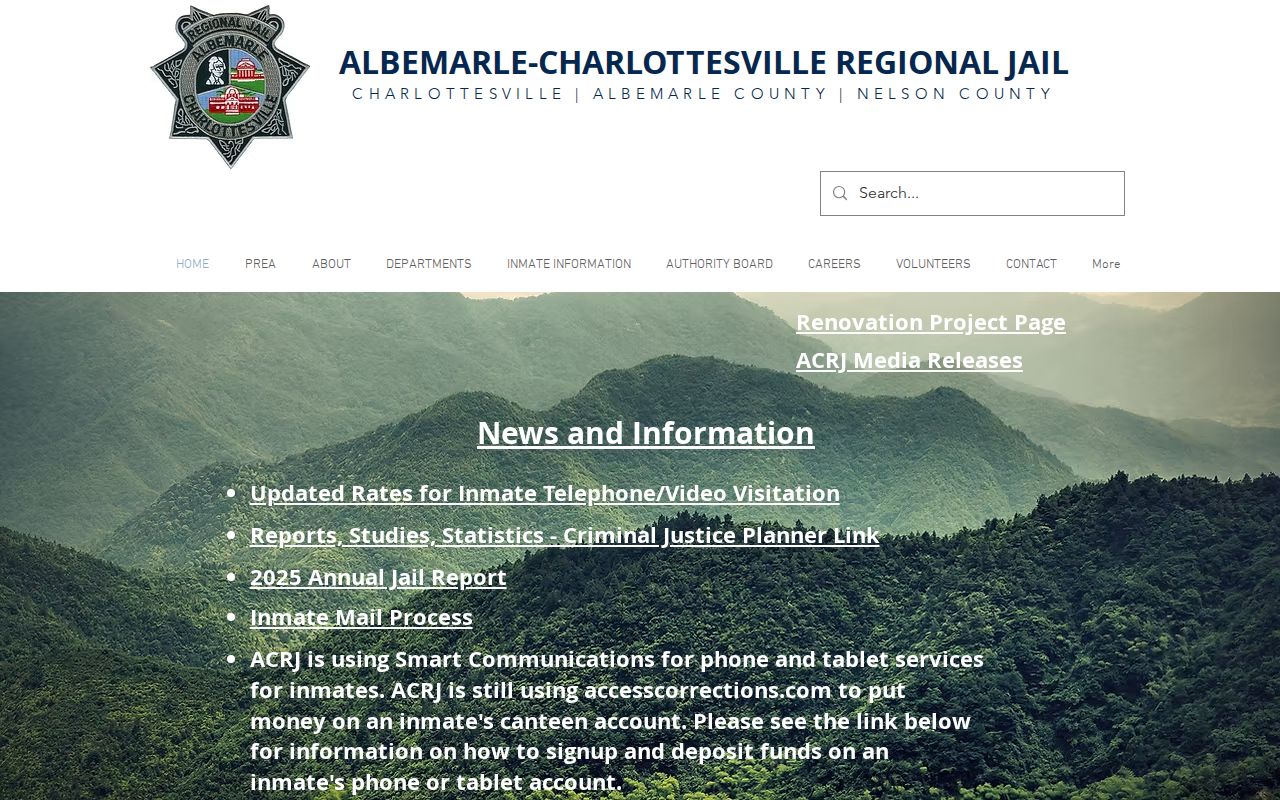
That regional structure explains why a Nelson release search points outside the county to a Charlottesville jail office.
Where ACRJ Releases Go
Ending ACRJ custody does not always mean returning home. A person may enter the community after bond, dismissal, time served, a suspended sentence, or completion of a local term. The same removal from local custody can reflect delivery to VADOC after a state-responsible sentence, transfer to another jail, movement under a detainer, or another court-directed placement.
| ACRJ custody change | What to verify next |
|---|---|
| Bond or dismissal | Court order plus ACRJ’s actual release entry |
| Local sentence completion | Jail-credit calculation, received orders, and physical release record |
| Transfer to VADOC | ACRJ transfer record and VADOC locator after intake updates |
| Transfer to another jail | Receiving authority and the release-to field |
| Detainer pickup | Releasing and receiving agency records |
| Community supervision | Executed release papers and VADOC District 13 status |
A detainer is a request by another authority to hold or receive the person. A transfer closes one custodian’s event while another custody period starts. The destination field or releasable transfer record matters because “released” from ACRJ alone may describe only the end of regional-jail control.
Note: Release from ACRJ may begin another authority's custody, so the destination or receiving-agency field should always be checked.
Confirm an ACRJ Release
ACRJ points its inmate-locator control to Virginia VINELink. That tool searches a named person in current local or regional jail data and can provide custody-change alerts. It is not a permanent release archive and does not publish an official Nelson list of everyone released during a recent time window.
- Search the person in Virginia VINE. Use the name or offender ID and confirm ACRJ as the holding facility.
- Open Record Details. Read the stated custody status and event exactly as shown.
- Contact ACRJ Records. Ask for an existing release, disposition, transfer, or court-order receipt entry.
- Check both Nelson court tracks. General District Court and Circuit Court records may contain different stages of the same felony matter.
- Follow any receiving authority. Search VADOC, another jail, BOP, or ICE only when the custody path supports it.
The ACRJ Inmate Records page explains the official fallback and local release-date limits shown below.
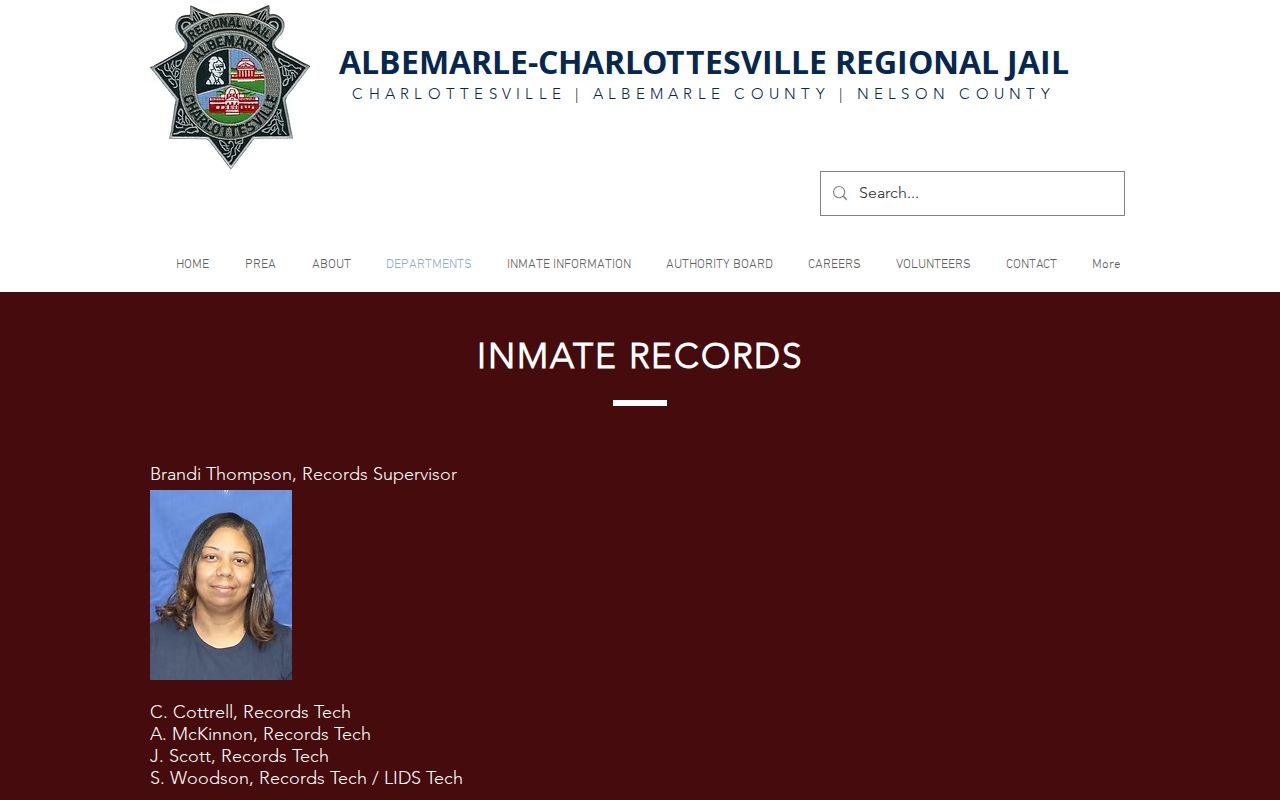
The page directs past-release questions to Records and explains why a court result alone may not mark completed release processing.
Note: ACRJ links VINE for named-person custody checks, but it does not publish an official Nelson recent-release archive.
ACRJ Release Orders and Timing
ACRJ cannot process a release until actual orders arrive from every court involved. Its records page warns that receipt can take several days. A judge’s oral ruling or a changed online docket can therefore precede the jail’s physical release event. The court order supplies legal authority, while ACRJ’s record shows when the facility completed processing.
Only Records answers the local sentence calculations and release dates described by ACRJ for terms of 12 months or less, assuming no detainer or pending charge changes the outcome. State-responsible time belongs to VADOC even when a person is still housed locally. The building alone does not decide who computes the sentence.
Local good-time rules also resist simple arithmetic. ACRJ states that felony jail dates already include maximum good time and that mandatory jail terms do not receive good time. Eligible misdemeanor trustee Jail Good Time is not projected in advance and is submitted on a biweekly basis. Eligible program Earned Good Time is discretionary. The safest answer comes from Records, not a private date calculation.
Request ACRJ Release Records
A focused request should name the person, give the date of birth or booking number if known, identify Nelson as the committing jurisdiction, and state an approximate booking or release range. Ask for the specific existing item needed. Useful items can include the booking sheet, release or disposition entry, court-order receipt, jail-credit computation, transfer or detainer entry, and adult intake photograph.
Begin with ACRJ Records for routine questions. A formal Virginia FOIA request goes to the ACRJ FOIA officer. Ask which portions are releasable, request electronic copies, and seek an advance cost estimate. Virginia FOIA applies to existing records. The jail need not create a new report or answer a broad request for every fact about a person.
Albemarle-Charlottesville Regional Jail
160 Peregory Lane
Charlottesville, VA 22902
Main: 434-977-6981
Fax: 434-951-1339
info@acrj.org
The main line handles general facility routing. Release-document questions should go to Records, while formal public-record requests use the designated FOIA channel.
Records and FOIA
Records: 434-977-6981 ext. 303
Monday through Friday, 8:30 a.m. to 4 p.m.
FOIA Officer Theresa Schwab: ext. 268
foiarequests@acrj.org
ACRJ says its ACRJ-only past and current jail-credit records are retained for three years. That statement should not be expanded to every booking image or release document. Ask about the retention of the exact record sought.
ACRJ Release and Nelson Courts
Nelson cases can split between the General District Court and Circuit Court. General District Court handles misdemeanors, traffic cases, and preliminary felony stages. Circuit Court holds felony trials and sentences, appeals, and expungement or sealing matters. Virginia does not offer one universal statewide circuit name search, so select Nelson in each applicable system.
Read the charge, case number, hearing and disposition entries, bond action, sentence, and final order. A dismissal in one case does not clear a different case or detainer. For a felony that began in District Court, the preliminary record may sit there while conviction and sentence appear in Circuit Court. ACRJ must receive every controlling order before it can release.
The full Nelson County released-inmate search joins these court records with ACRJ, VADOC, and other custody systems. Note: A court order explains why custody should change, but the jail record confirms when the physical ACRJ event was completed.
ACRJ Property Release Rules
Property pickup during confinement uses a separate ACRJ procedure. The inmate must fully complete a Property Release Form and name the person allowed to collect the items. Only that named recipient can collect them, and the recipient must sign. Questions go to Sergeant Scott Saberg at extension 235 or sabergs@acrj.org.
This process does not establish that the inmate has been discharged. It can happen while the person remains in custody. Property handling at actual release should be confirmed directly with ACRJ, especially if transfer to VADOC, another jail, or a detainer follows. The official property page controls the current authorization rules.
Keep the signed property transaction separate from the custody evidence. One proves authorized pickup. The other must identify the release or transfer date, authority, and destination.
Why Nelson Uses ACRJ
ACRJ opened in 1974 and took its current regional name in 1996. Nelson County joined the regional arrangement in 1997, according to official county material. That history explains the present route from a Nelson arrest to a jail located in Charlottesville. The arrangement is not an error in the search result and should not be replaced with a different regional authority.
The authority is carrying out a renovation project with Nelson-specific public involvement. Project material includes a February 7, 2024 forum and discussions of alternatives, health, and reentry. Those efforts provide context for the regional facility, but they do not change the proof needed for an individual release.
The ACRJ renovation project page documents the local engagement shown below.
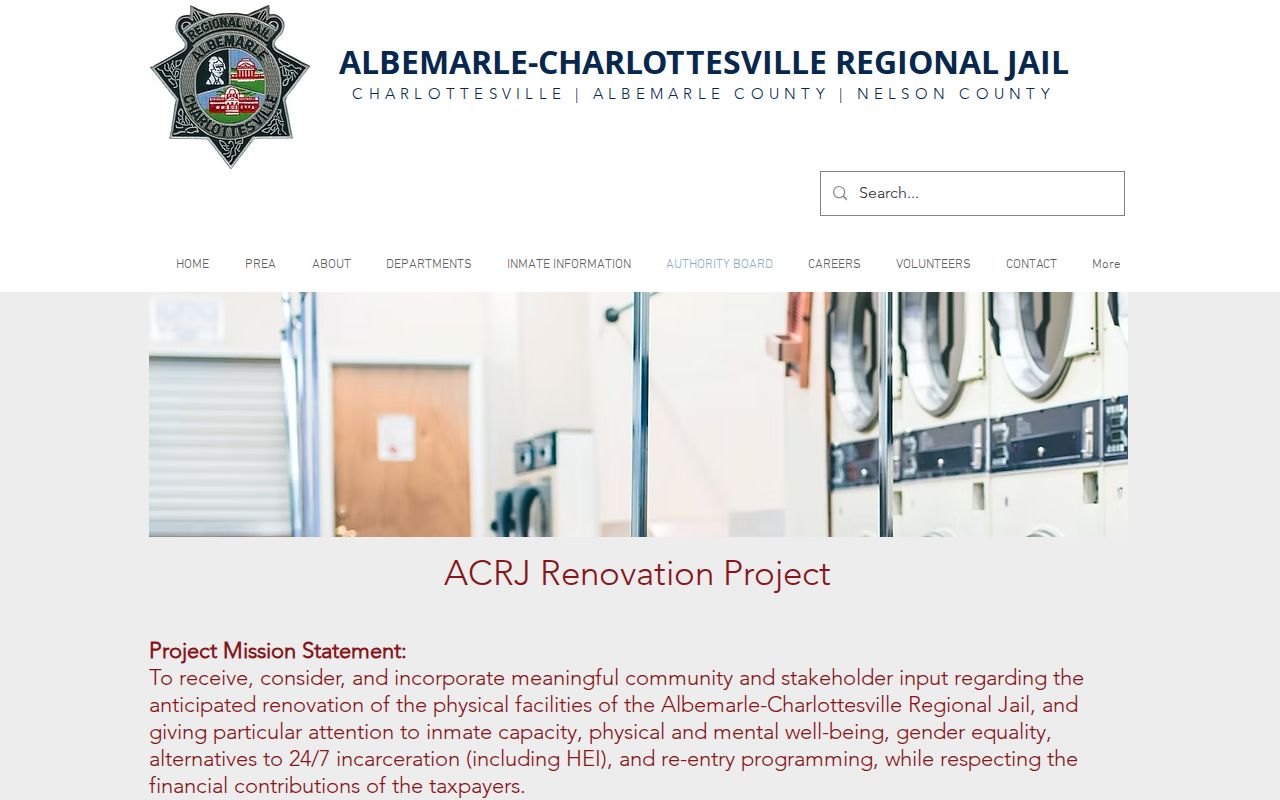
The material helps explain the facility’s regional role and continuing Nelson participation without turning renovation details into a custody-status claim.
Read ACRJ Release Status Carefully
Use the most precise status supported by the record. Bond ends jail confinement while the case continues. Time served describes credited sentence completion. Probation moves legal control into the community and can also be ordered without a prior prison stay. A transfer ends ACRJ custody but starts another authority’s control. A detainer can lead to immediate pickup.
If VADOC authority follows, search the state locator after allowing for intake updates. A community-supervision result supports continuing state authority outside confinement. If federal or immigration custody is involved, BOP, USMS, or ICE records answer only their own custody boundaries. Release from one agency cannot safely be translated into return to the community.
The strongest local proof combines the executed court order with ACRJ’s actual release or disposition record. VINE is useful and timely corroboration. A current roster, old news item, or copied jail page is weaker because it can omit the legal reason and destination.
Public Record Search
Sponsored Results