
Nelson Parole and Probation
Virginia assigns different roles to the court, the Virginia Parole Board, and the Virginia Department of Corrections. A court can order probation instead of confinement, after a suspended part of a sentence, or as post-release supervision. The Virginia Parole Board decides parole in the limited cases that remain eligible. VADOC then manages both probationers and parolees through its district offices. A Nelson County supervision record must therefore be read with the sentencing order, not in isolation.
Parole usually follows confinement and permits an eligible person to serve the balance under set conditions. Probation is a court-ordered form of community supervision and may begin without a prison release. Post-release supervision is a broader phrase used when a sentence requires oversight after confinement. Earned-credit release is not parole. A transfer from ACRJ to VADOC is not community supervision either.
| Feature | Parole | Probation |
|---|---|---|
| Who authorizes it | Virginia Parole Board for an eligible case | Sentencing court |
| Typical starting point | Release from confinement | May replace confinement or follow a suspended term |
| Who supervises | VADOC district office | VADOC district office when state supervision applies |
| Best proof | Board decision plus executed release documents and current VADOC status | Sentencing order plus current VADOC status |
Several record terms also affect how a result should be read. Their meanings help separate a custody end from the duties that may continue afterward.
- Discharge
- The formal end of custody or supervision authority.
- Absconder
- A person alleged to have stopped reporting or left supervision without permission.
- Detainer
- A request by another authority to hold or take custody of a person.
- Suspended sentence
- A sentence part the court does not require the person to serve unless later conditions trigger it.
Verify Nelson Post-Release Supervision
The VADOC Inmate and Supervisee Locator covers people under current state custody or community supervision. Search with a seven-digit DOC ID when known. Otherwise, use the full last name and at least the first three letters of the first name. Optional location, age, race, and gender filters can narrow common names. Compare all displayed identifiers before treating the record as a match.
- Identify the custody path. A local Nelson arrest usually begins at ACRJ, while a state sentence or existing DOC number points to VADOC.
- Search the VADOC locator. Read the supervision or location result literally. A district result supports continuing VADOC authority.
- Check the court order. Nelson Circuit Court records can distinguish probation, post-release supervision, and an eligible parole case.
- Confirm with District 13. Ask the office about the correct public verification route for a specific supervision question.
- Request the record if needed. The executed Order of Release, Conditions of Probation or Parole, and discharge record are stronger than a missing web result.
The locator is updated daily, yet VADOC warns that information may still be inaccurate or out of date. It is not a full archive of every person once supervised. For the broader release trail, including ACRJ records and court confirmation, use the Nelson County released-inmate search.
A Virginia Jail VINE alert should be treated as local-custody evidence, not a substitute for the state locator. When ACRJ transfers a person into VADOC responsibility, registration does not automatically cross into the state notification program. Eligible victims and immediate family use NAAVI for state-custody notices, while the public locator remains the ordinary current-status tool. If the person later returns to a local jail, a new local VINE registration may be needed. Following the actual custodian avoids reading a notification gap as an end to supervision.
Nelson Supervision Uses District 13
Nelson County is assigned to VADOC Lynchburg District 13. That point can prevent a common routing error. ACRJ sits in Charlottesville, but the physical location of the regional jail does not decide the community office for a Nelson resident. District 13 serves Nelson along with Lynchburg, Amherst, and Campbell. The current VADOC directory should control if staff assignments or office details change.
The official VADOC facilities and offices directory is the source for the assignment shown in the captured view below.
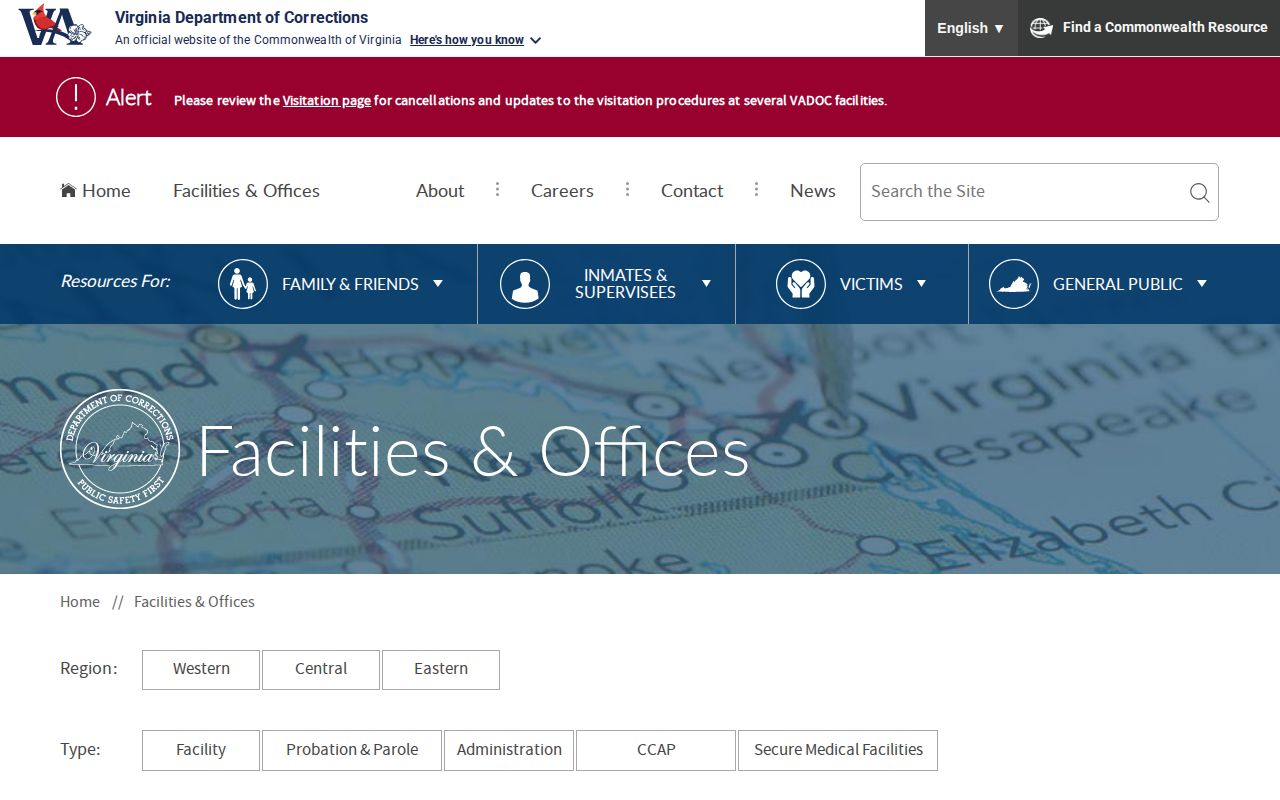
The directory result ties Nelson supervision to the Lynchburg office rather than the jail’s Charlottesville address.
VADOC Lynchburg District 13
2209 Florida Avenue
Lynchburg, VA 24501
434-947-6651
Use the district office for current supervision routing. Use VADOC records for formal release or discharge documents, and use the sentencing court for the terms imposed by the judge.
Note: A Charlottesville jail release does not change Nelson County's assignment to the VADOC supervision office located in Lynchburg.
Nelson Parole Status Evidence
Routine discretionary parole was abolished for most Virginia felonies committed on or after January 1, 1995. The rule in Virginia Code § 53.1-165.1 makes offense date and statutory eligibility central. Older sentences and defined exceptions remain, including some juvenile-offense, jury-instruction, and geriatric conditional-release provisions. A person’s age or time served alone does not answer eligibility.
The Virginia Parole Board monthly reports provide public decision records. A report may show a Grant or Not Grant outcome, the decision and certification dates, DOC number, offense and sentence details, reasons, and Board votes. A Grant is not the physical release date. Release planning, certification, detainers, conditions, and VADOC processing can still stand between the vote and departure from confinement.
The Board’s stated role is shown in the official captured page below.
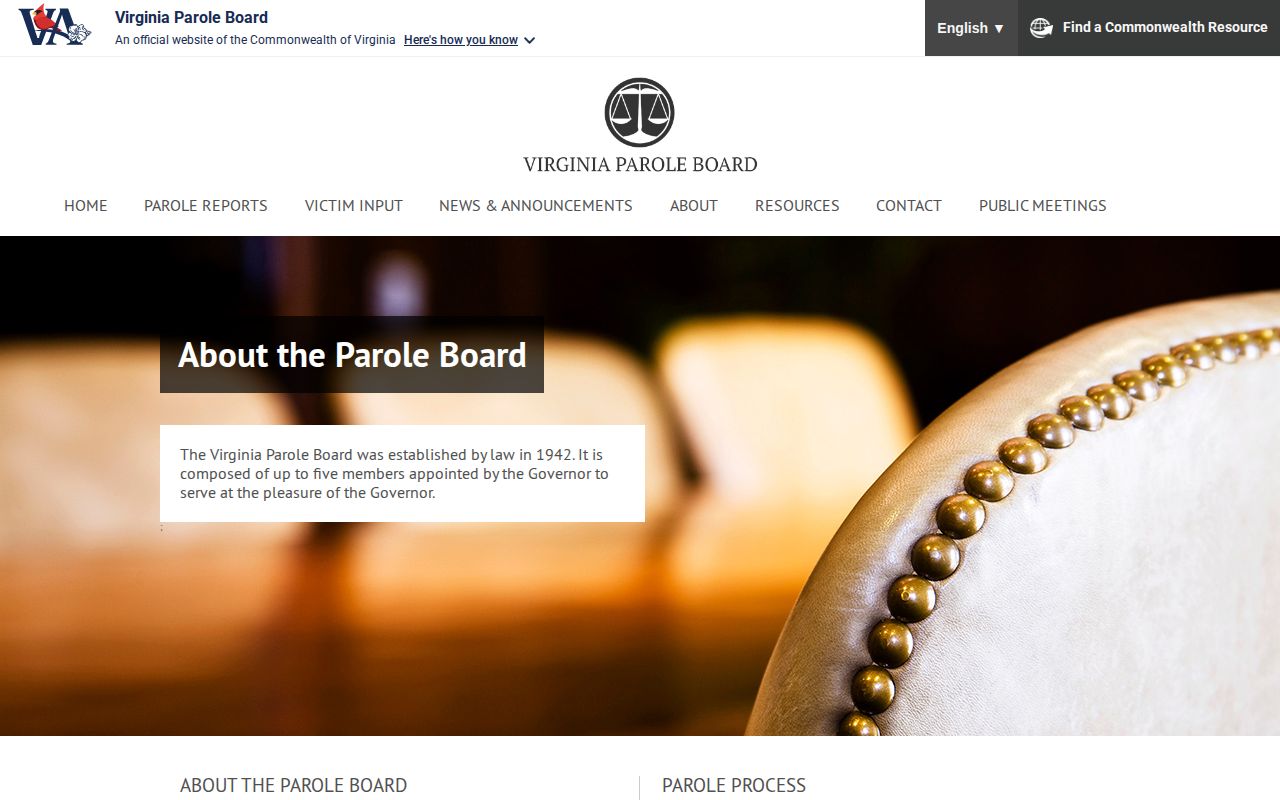
This division of duties is why the Board decision, VADOC release record, and District 13 supervision result answer different questions.
Note: A Parole Board Grant is a decision record, not proof that the person physically left a VADOC facility that day.
Nelson Supervision and Violations
Conditions can include reporting, travel limits, treatment, payment duties, or other terms stated in the court order and supervision papers. The precise conditions belong to the person’s record. A public locator result does not show that every term has been met. It also does not prove there is no alleged violation, detainer, or warrant.
No official statewide public VADOC absconder or warrant list was identified for this research. Do not turn a missing or changed locator entry into an absconder claim. District 13 can route a lawful status question, while the relevant court record may show a filed violation proceeding or new order. Virginia Jail VINE concerns local jail custody and alerts, not the full status of community supervision.
If a person is taken into ACRJ on a new matter or alleged violation, that local custody event and the VADOC supervision case remain distinct records. Confirm each with its own agency. Note: A custody alert can support a reported change, but it does not state the full legal basis for a supervision action.
Property During Nelson Release Planning
ACRJ has a specific property-release procedure for a person who remains confined. The inmate must fully complete a Property Release Form and name the recipient. Only that named person may collect the property, and the recipient must sign. Questions go to Sergeant Scott Saberg at extension 235 or sabergs@acrj.org.
The procedure does not prove that discharge has occurred. It authorizes a property pickup during confinement. Property returned at the actual release event should be confirmed with ACRJ separately, especially when a transfer to VADOC, another jail, or a detainer may follow. The ACRJ property page controls the current process.
For someone moving into community supervision, keep the signed release papers and current office details together. Those records help distinguish property pickup, physical departure, and the later start of reporting duties.
Nelson Recovery Court Navigation
The Virginia Courts directory lists Nelson County Recovery Court through Nelson Circuit Court. The directory gives a Tuesday 1 p.m. schedule and identifies Chris Weidl at 540-672-2881 extension 213 as the program contact. The program is a court option with its own eligibility rules. It is not proof that a person was released, placed on probation, or accepted into the program.
Confirm both eligibility and the current meeting schedule through the Virginia recovery court directory and Nelson Circuit Court. A court program may operate alongside probation or another sentence term, but only the order and program record establish a particular person’s status.
OAR Jefferson Area Community Corrections also appears in official VADOC reentry material as serving Nelson residents after incarceration. Current services and entry rules should be checked before relying on that route.
Nelson Supervision Discharge Records
Supervision ends through an official discharge, sentence expiration, or court action that applies to the case. A person who has completed both custody and supervision may fall outside the locator’s stated current population. That absence is not enough to establish the end date. A narrow VADOC request can seek a verified discharge date, status, and releasable release documents.
VADOC accepts records requests through its FOIA process. A former inmate seeking an inactive personal record has a separate notarized procedure under Operating Procedure 050.6. Useful documents may include an Order of Release, Conditions of Probation or Parole, a notification-of-release letter, and a status or discharge confirmation. Some information can be withheld or redacted.
A narrow request works best. Include the full legal name, DOC number when known, the Nelson court or jurisdiction, an approximate date range, and the exact status or discharge item sought. VADOC asks that requests describe existing records with reasonable care. The requester can ask for an ordinary electronic format and a cost estimate. Court, jail, and state records should remain separate even when they concern the same person.
Compare the official discharge result with the Nelson Circuit Court order. The court explains the sentence. VADOC establishes how its authority ended. Together, they provide firmer proof than an old projected date, a Parole Board grant, or a disappeared locator entry.
Public Record Search
Sponsored Results